




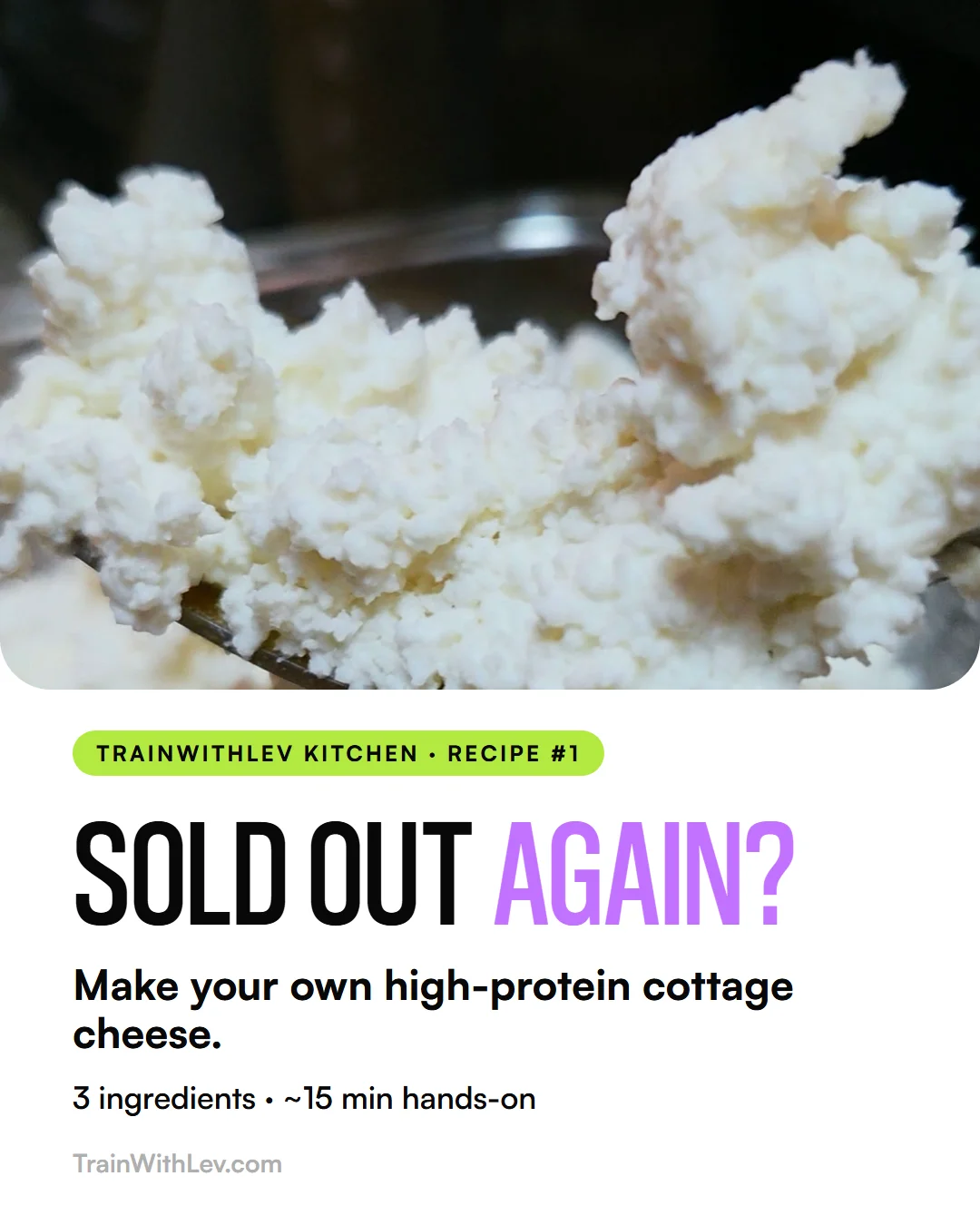
Let's be honest: cottage cheese is having a moment.
For years it sat quietly on the bottom shelf, the "diet food" nobody got excited about. Then social media found it. Cottage cheese ice cream, cottage cheese flatbread, cottage cheese in everything. The high-protein crowd started clearing the shelves, and now the tub is either sold out or priced like a luxury.
So I started making my own. It takes three ingredients, about 15 minutes of hands-on time, and a little patience. It's fresher, I know exactly what's in it, and it has quietly become one of my favourite kitchen habits.
Welcome to the first recipe in my TrainWithLev Kitchen series.
So, what is cottage cheese?
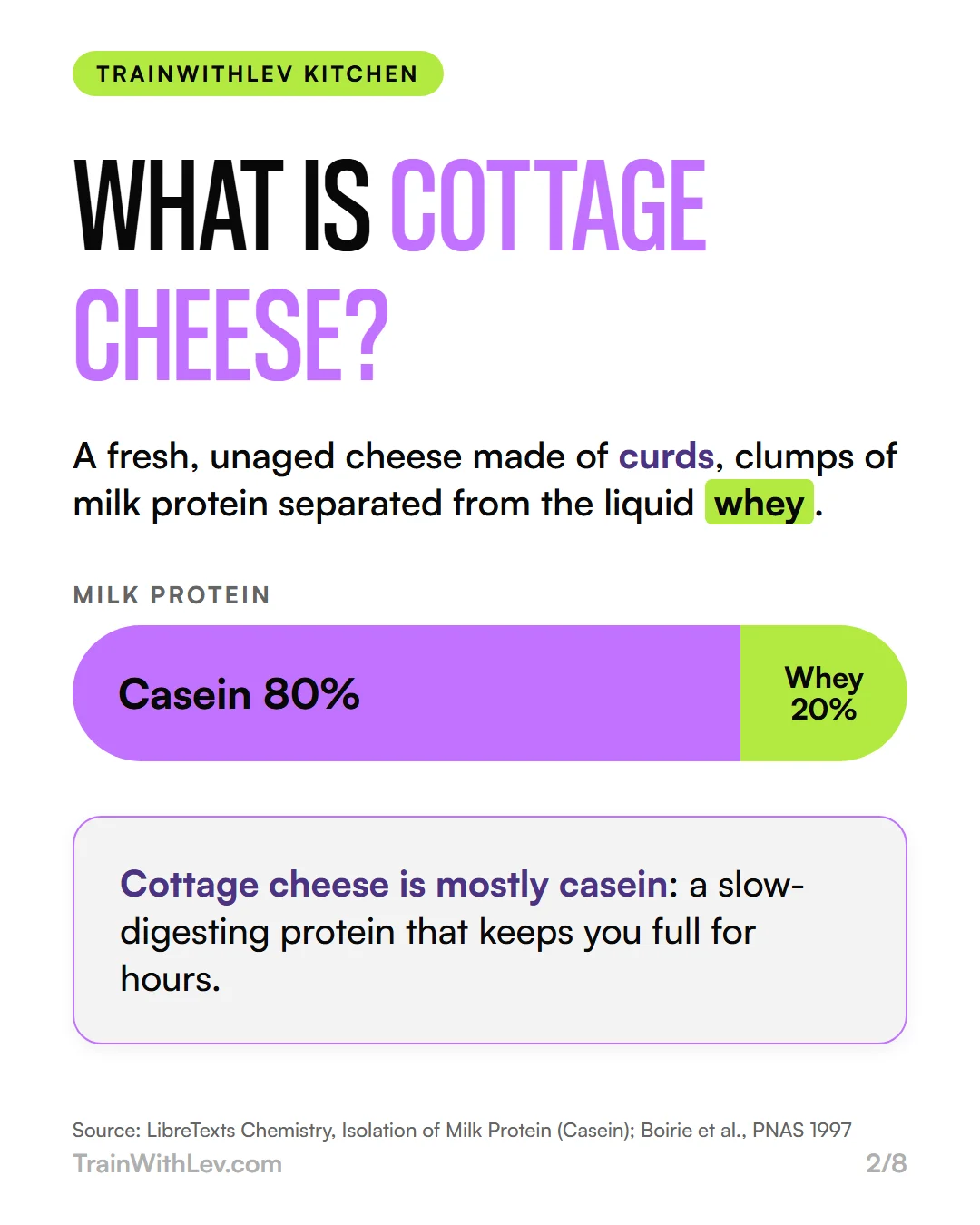
Cottage cheese is a fresh, unaged cheese made of curds: soft clumps of milk protein that separate from the liquid, called whey. Yes, that curds and whey. Little Miss Muffet was ahead of her time.
Milk protein comes in two main types. About 80% is casein and the other 20% is whey protein. Cottage cheese is mostly casein, and that's what makes it special. Casein is a slow protein: in a classic study comparing the two, whey gave a fast, short spike of amino acids in the blood, while casein released them gradually over several hours. That slow, steady release is a big part of why a bowl of cottage cheese keeps me full for so long.
The kitchen science: why lemon juice turns milk into curds
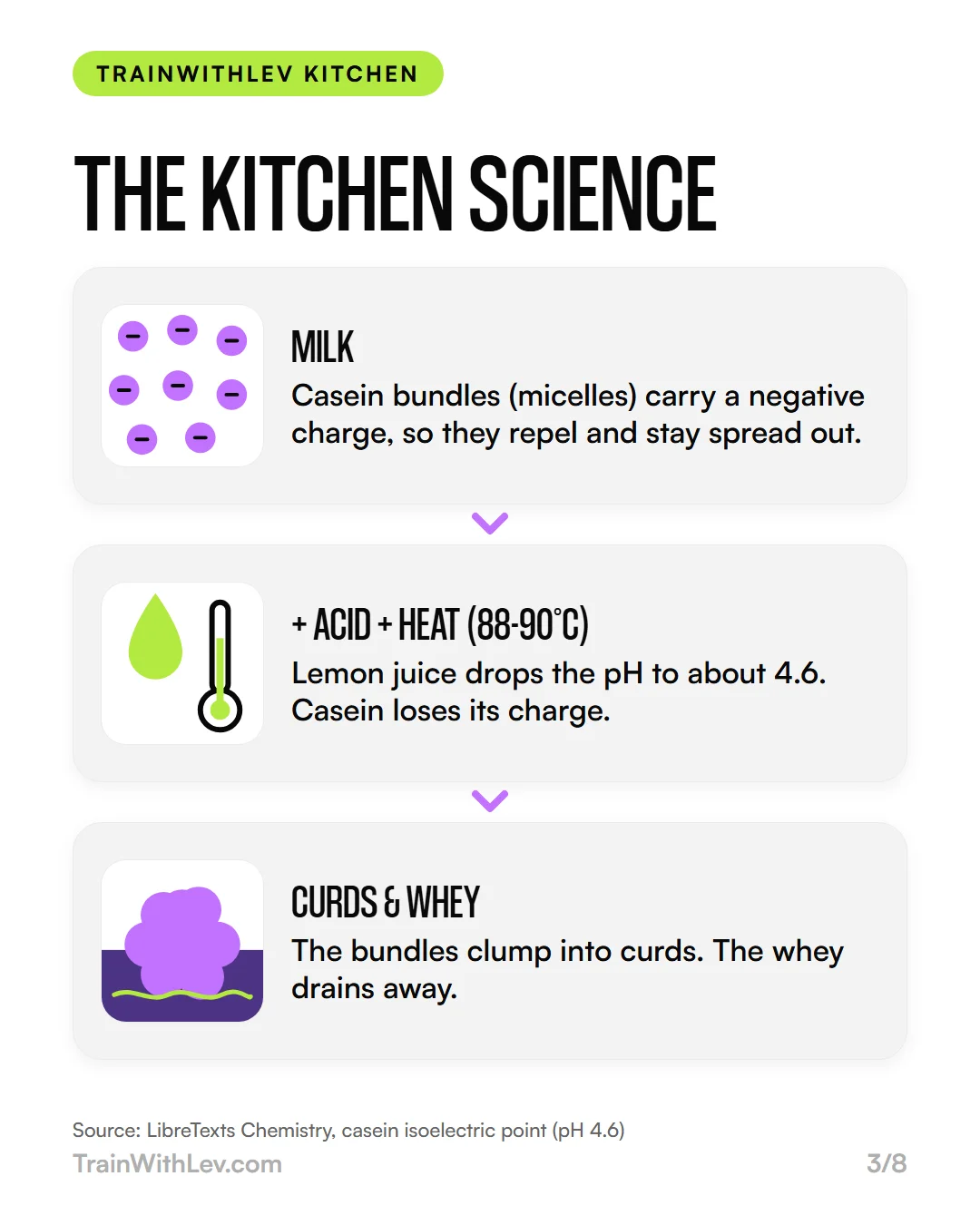
In milk, casein floats around in tiny bundles called micelles. Each one carries a slight negative charge, so they push each other away and stay evenly spread out. That's what keeps milk smooth.
Then you add acid. Lemon juice lowers the milk's pH to around 4.6, casein's isoelectric point, where it loses its charge. With nothing pushing them apart, the bundles start clumping together into curds. Heating the milk to 88-90°C makes this happen fast and firm, and it also pulls some of the whey protein into the curds, so you keep more of the protein.
What's left is white curds floating in a yellowish liquid. Acid, heat and a bit of waiting do all the work.
A quick honesty note from your coach: most store-bought cottage cheese is made with bacterial cultures and often finished with a little cream. My lemon-and-heat version is closer to simple acid-set fresh cheeses like paneer. Same fresh curds, same protein, same uses in the kitchen, with a lot less fuss.
Why I love it: real-food protein that keeps you full
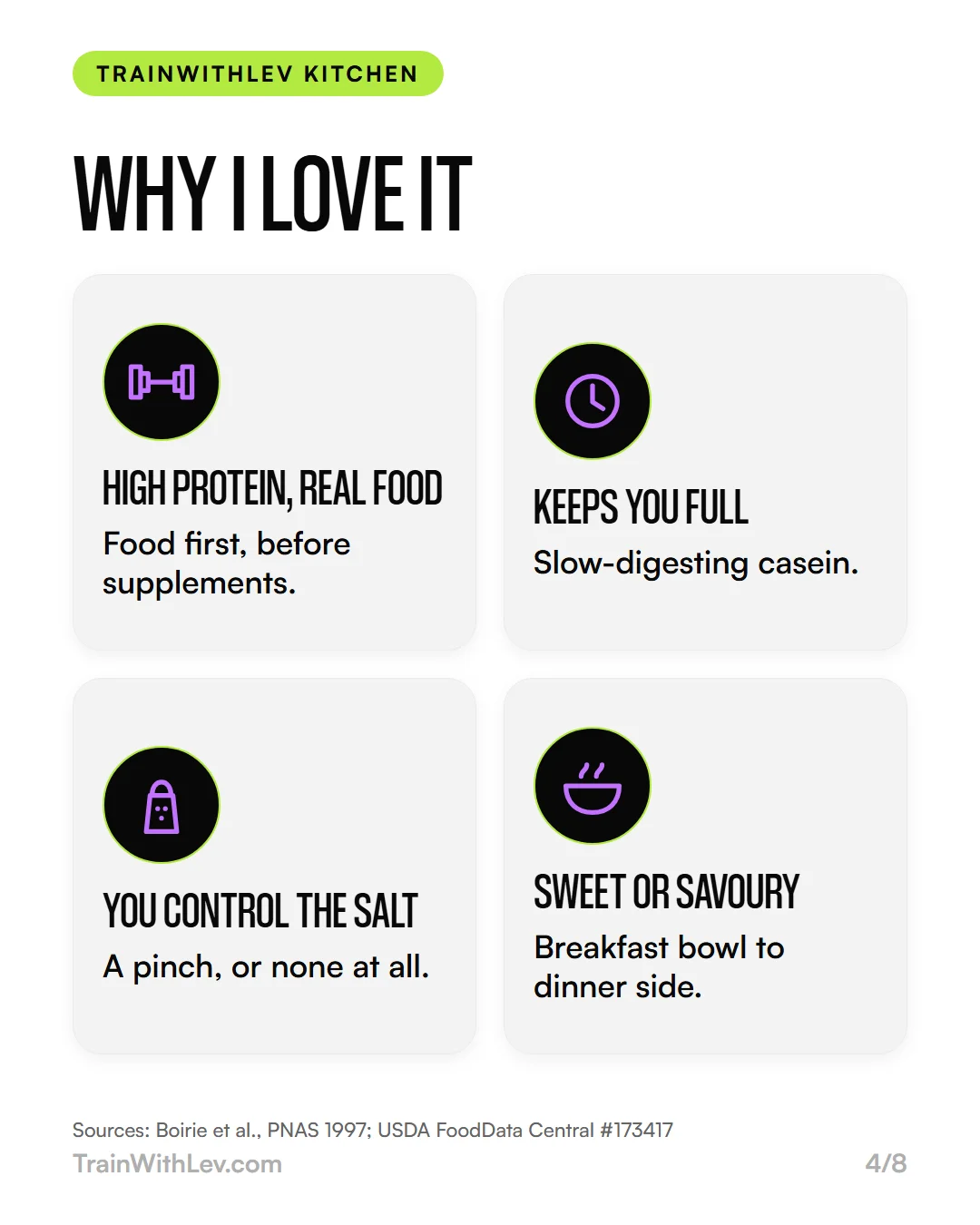
It's high protein from real food. Store-bought low-fat (1%) cottage cheese has 12.4 g of protein per 100 g, according to the USDA. I'll always choose protein from food before reaching for a supplement, and this is one of the easiest ways to do it.
It actually keeps you full. Thanks to that slow-digesting casein, it's a snack that holds me until my next meal. If you're working on fullness, it pairs well with the fibre habits in my fibermaxxing guide.
You control the salt. That same USDA entry lists around 400 mg of sodium per 100 g of regular low-fat cottage cheese. At home it's a pinch, or none at all.
It goes sweet or savoury. From breakfast bowl to dinner side, it fits almost anywhere. And it's food you can enjoy without a second thought, because feeling good after you eat is the whole point.
Who it's great for (and who should take care)
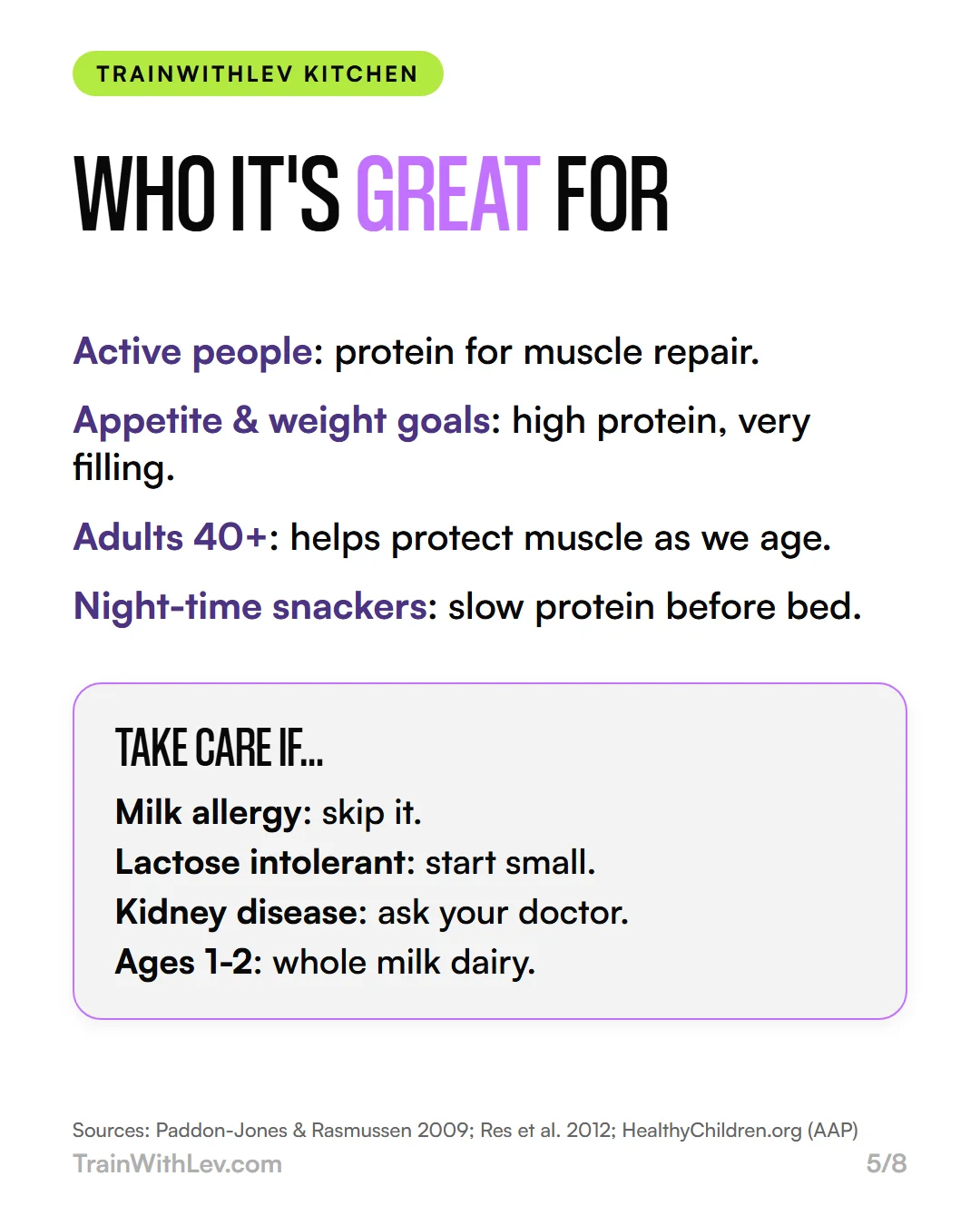
Pretty much anyone who eats dairy. Active people and lifters get protein to support muscle repair. If you're working on appetite or weight goals, it's filling and easy to build into a plan.
Adults over 40 benefit too. Research shows we lose roughly 3-8% of our muscle mass per decade after 30, and getting enough protein through the day is one of the main tools to slow that down. Pair it with lifting, as I explain in strength training after 40.
And for the night-time snackers: in one study, 40 g of casein taken before sleep after an evening workout raised overnight muscle protein synthesis in young men. A small bowl before bed is my go-to.
It's a lovely family food as well. Just remember that experts advise whole milk for little ones aged 12-24 months, so keep the low-fat version for the grown-ups.
A few people should take care. If you have a milk allergy, skip it. If you're lactose intolerant, start with a small portion and see how you feel. And if you have kidney disease or a prescribed protein limit, check with your doctor first.
Food first, habits that last, and real numbers to show your progress.
How to make cottage cheese at home
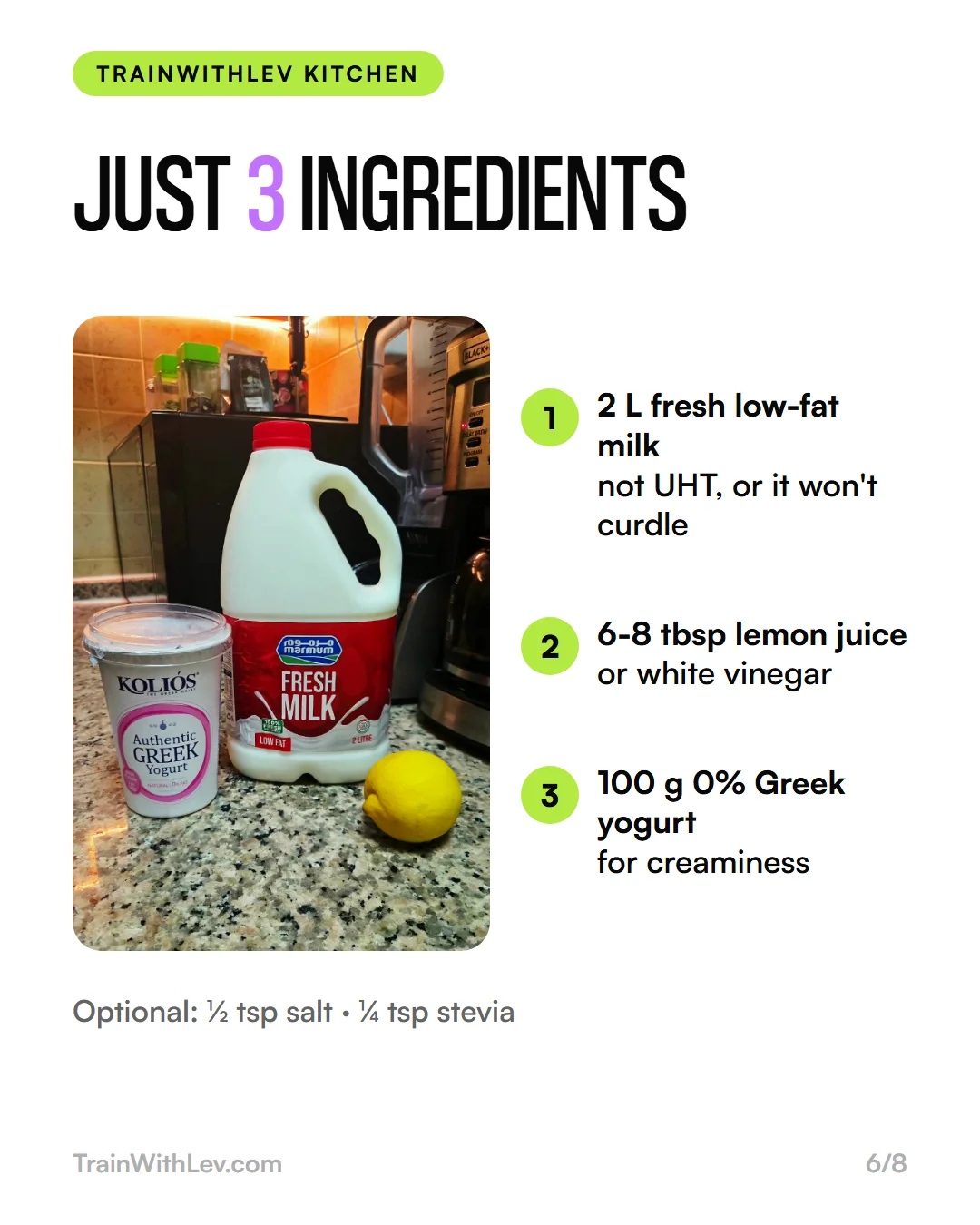
What you'll need: 2 litres of fresh low-fat milk, 6-8 tablespoons of fresh lemon juice (or white vinegar), and 100 g of 0% fat Greek yogurt. Optionally, add ½ teaspoon of salt and ¼ teaspoon of stevia if you like it a little sweet.
One golden rule: use fresh pasteurized milk, never UHT. Long-life milk has been heated so hard that its proteins won't curdle properly. Want it even lower in fat? Use skim milk.
For tools, grab a heavy-bottomed pot, a kitchen thermometer, a cheesecloth (or thin, clean cotton towel), a colander, and a slotted spoon. A kitchen scale is optional, but you know I love data.
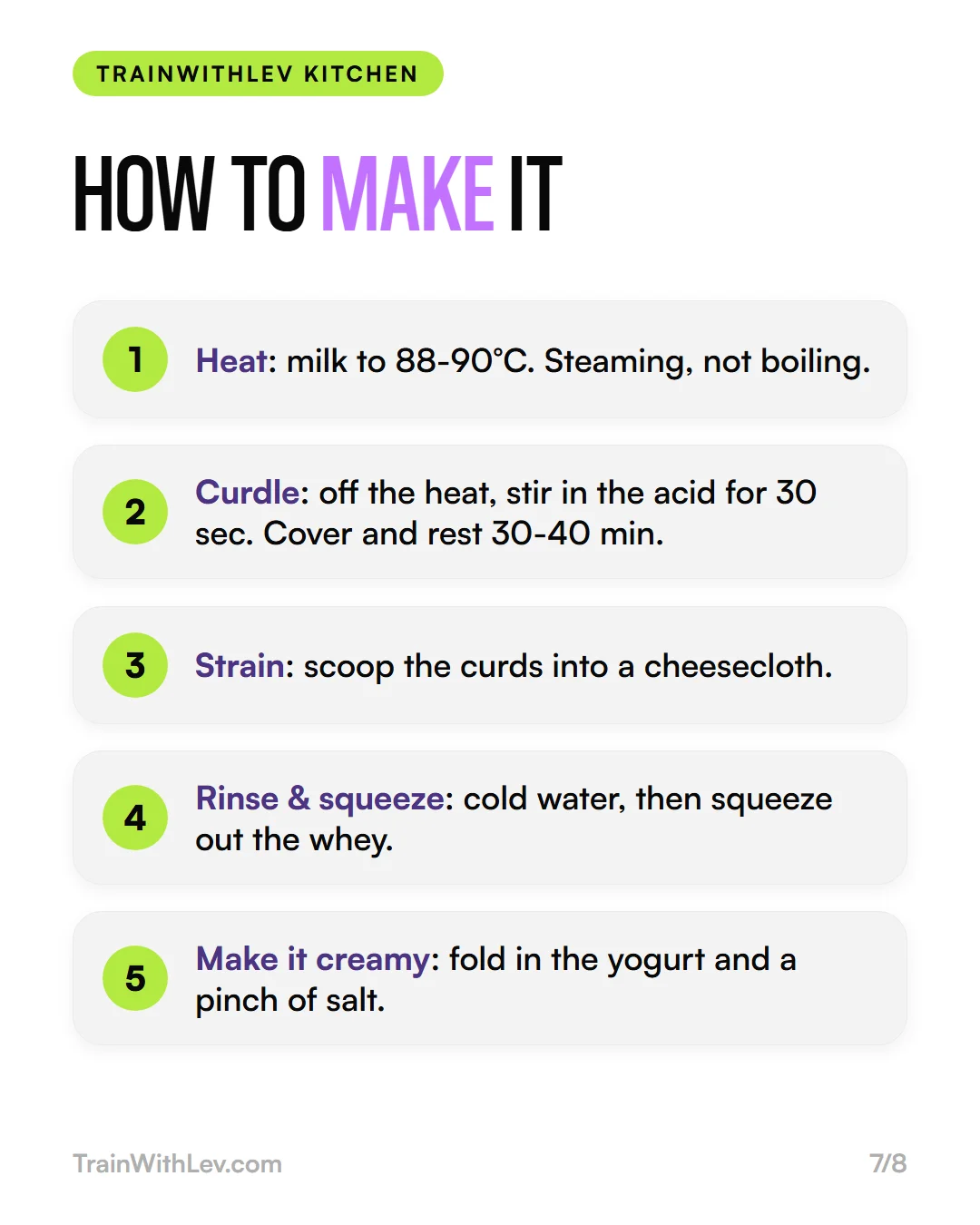
1. Heat. Warm the milk over medium heat, stirring often so it doesn't catch, until it reaches 88-90°C. It should be steaming with small bubbles at the edge, not boiling.
2. Curdle. Take the pot off the heat, pour in the lemon juice and stir gently for 30 seconds. You'll see curds form almost instantly. Put the lid on and leave it undisturbed for 30-40 minutes. Go do something else.
3. Strain. Line the colander with cheesecloth over a bowl and scoop the curds in with a slotted spoon.
4. Rinse and squeeze. Gather the cloth into a bundle, rinse it under cold running water to wash away the lemony taste, then squeeze out the whey. Squeeze less for softer curds, more for firmer ones.
5. Make it creamy. Break the curds up with a fork, then fold in the Greek yogurt, salt and stevia. Taste and adjust.
My extra step: weigh it. Knowing your final yield means you can work out the real nutrition per serving instead of guessing.
Storage, leftover whey and how I eat it
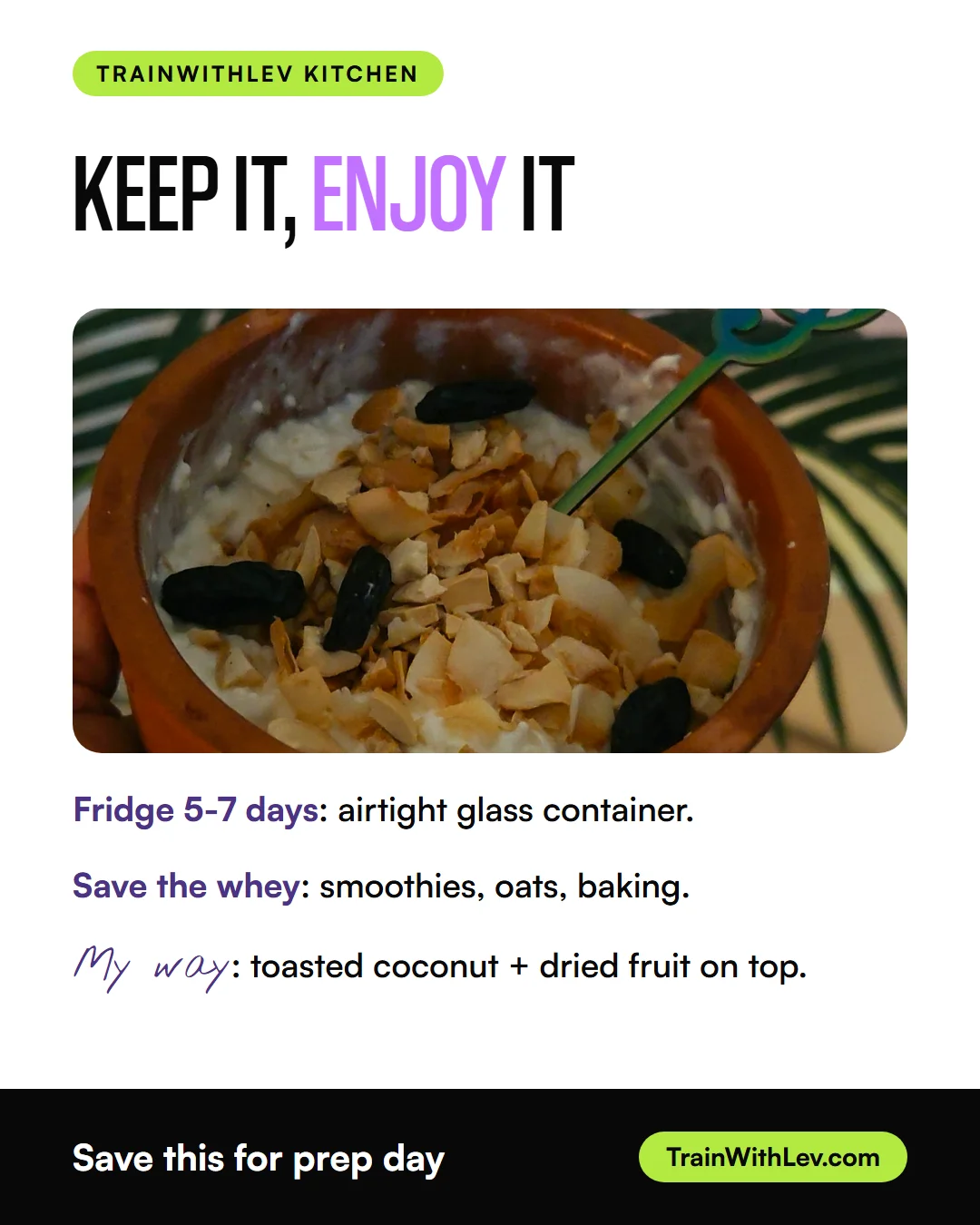
Store it in an airtight glass container in the fridge for 5-7 days. Freezing is safe but turns the texture grainy, so I don't recommend it.
Don't throw away the whey. It still has some protein and minerals. Use it in smoothies, cook your oats or rice in it, or swap it for water in baking.
If the curds didn't form, the milk was probably UHT or not hot enough. Warm it back to 88°C and add another tablespoon or two of acid. Too sour? Rinse a little longer next time.
My favourite way to eat it is a big scoop topped with toasted coconut flakes and a few dried fruits. Sweet, crunchy, creamy, and packed with protein. It's also great with berries and honey, with cracked pepper and cucumber, spread on toast, or blended into pancake batter. Timing your protein through the day matters too; I cover that in eat with the clock.
The bigger picture
Making your own cottage cheese isn't just about beating the "out of stock" sign. It's a small habit that adds up: you know what's in your food, you spend less, and you build the kind of kitchen routine that makes eating well feel easy instead of forced.
That's what I'm about as a coach. Food first, habits that last, and real numbers to show your progress. No quick fixes, just good food you actually enjoy.
Make it this week, then tag me so I can see your curds.
FAQs
Is homemade cottage cheese the same as store-bought?
Not exactly. Most store-bought cottage cheese is set with bacterial cultures and often mixed with a little cream. This version uses lemon juice and heat, so the curds are closer to a simple fresh cheese like paneer. You still get the same casein-rich curds and the same uses in the kitchen, and you decide how much salt and fat go in.
Can I use vinegar instead of lemon juice?
Yes. White vinegar works just as well and tastes more neutral, while lemon gives a slightly softer, fresher flavour. Use the same amount, 6-8 tablespoons for 2 litres of milk. Either way, rinse the curds under cold water afterwards to wash out most of the sour taste.
Why didn't my milk curdle?
The two usual culprits are UHT (long-life) milk and milk that wasn't hot enough. UHT milk has been heated so intensely that its proteins don't clump properly, so always use fresh pasteurized milk. If you used fresh milk, warm it back to 88-90°C, add another tablespoon or two of acid, and give it a gentle stir.
How much protein is in homemade cottage cheese?
It depends on your milk and how much whey you squeeze out, which is why I weigh my batch. As a reference point, store-bought low-fat cottage cheese has 12.4 g of protein per 100 g. Add up the protein on your milk and yogurt labels, divide by your final weight, and you have your own number.
Want a nutrition plan built around real food you love? Book a free consultation with me.
This post is for general education, not medical advice. If you have a medical condition, allergy, or specific dietary needs, check with your doctor or a registered dietitian.